Keynote Speakers

Prof. Mo-Yuen Chow
Fellow, IEEE
North Carolina State University, USA
Bio - Mo-Yuen Chow earned his degree in Electrical and Computer Engineering from the University of Wisconsin-Madison (B.S., 1982); and Cornell University (M. Eng., 1983; Ph.D., 1987), joined the faculty at North Carolina State University (NCSU) in 1987, and Shanghai Jiao Tong University (SJTU) in 2022. He is currently a Distinguished Professor at SJTU and an Emeritus Professor at NCSU. Dr. Chow’s recent research focuses on distributed control, micro-grids and batteries management. He is the Director of the Advanced Diagnosis, Automation, and Control (ADAC) Laboratory and the Director of the Advanced Interdisciplinary Energy Research Center (AI-ERC) at Shanghai Jiao Tong University. He is an IEEE Life Fellow, the Co-Editor-in-Chief of IEEE Trans. on Industrial Informatics 2014-2018, the Editor-in-Chief of IEEE Transactions on Industrial Electronics 2010-2012. He has received the IEEE Region-3 Biedenbach Outstanding Engineering Educator Award, the IEEE ENCS Outstanding Engineering Educator Award, the IEEE ENCS Service Award, the IEEE IES Hornfeck Service Award, and the IEEE IES Mittelmann Achievement Award. He is a Distinguished Lecturer of IEEE Industrial Electronics Society. Dr. Chow has been consistently listed among Stanford University’s top 2% of scientists worldwide, and top 0.05% Highly Ranked Scholar-Lifetime in the Specialty of smart grid. He has led and contributed to more than 38 government and industry-funded research projects. He holds 10 U.S. patents and has authored 350+ papers in IEEE Transactions and IEEE conferences.
Speech Title: Advanced Dynamic Energy Management Systems (AD-EMS) in Microgrid Distributed Energy Resources Integration
Abstact: The advancing of distribution control technologies has been providing great opportunities to substantially improve various performances in large-scale highly dynamic and time-sensitive systems. This presentation will address a critical challenge of Microgrid Energy Management in Disaster Relief, where the operating environments can be characterized as rapidly evolving conditions, unpredictable disturbances, and strict timing constraints that demand fast, coordinated, and resilient control strategies. We will describe the Advanced Dynamic Energy Management System technologies and the integration of AI-Enhanced Digital Twin framework for Distributed Energy Resources currently being developed in the Advanced Diagnosis, Automation, and Control (ADAC) Lab at SJTU for Disaster Relief using microgrid technologies. We will also briefly introduce the recently developed Advanced Interdisciplinary Energy Research Center (AI-ERC) at SJTU.
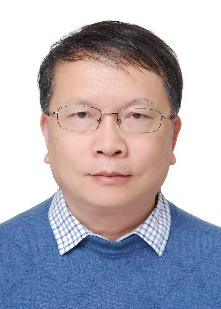
Prof. Li Ran
Fellow, IEEE & Fellow, IET
University of Warwick, UK & Huairou Laboratory, China & Chongqing
University, China
Bio - Li Ran received his PhD in
Electrical Engineering from Chongqing University in 1989 and participated in
the commissioning of the Gezhouba–Nanqiao HVDC system in China. He spent
seven years in the UK as a research fellow at the Universities of Aberdeen,
Nottingham, and Heriot-Watt, working on marine electrical propulsion,
offshore electrical systems, and EMC in drives.
In 1999, he became a Lecturer at the University of Northumbria and later
moved to Durham University, where he was appointed Chair in 2010. He joined
the University of Warwick as Professor of Power Electronics in 2012 and
currently splits his time between Warwick and Chongqing. His recent research
focuses on power electronics for renewable generation and smart grids, and
on the reliability of power semiconductors. He has also been seconded to
Alstom Power Conversion, undertaken a sabbatical at MIT, and is currently
seconded to Huairou Laboratory in Beijing.
Li is Co-Director of the Warwick–Chongqing Joint Key Laboratory in SiC Power
Electronics. He has received a Global Research Award from the Royal Academy
of Engineering, the Stanley-Gray Award from IMarEST, and IEEE Prize Paper
Awards. In 2024, he was presented the Collaboration Commemoration Award by
CRRC. He is an IEEE Fellow, IET Fellow, and a Chartered Engineer in the UK.
Title of Speech: Power Semiconductor Devices for Modern Grids:
Challenges and Opportunities
Abstract: Power
electronic systems are increasingly deployed in transmission and
distribution grids to support a range of low-carbon objectives. These
systems include MMC HVDC links, solid-state transformers (SSTs), solid-state
circuit breakers, fault current limiters, converters for microgrids and
hybrid AC/DC networks, and unified power flow or current controllers. To
achieve critical low-carbon goals, it is essential that power electronic
systems are reliable, efficient, and cost-effective. This requirement poses
significant challenges for the development of power semiconductor devices,
which largely determine overall system performance.
This presentation reviews the requirements of grid applications for
high-voltage, high-current power semiconductor devices and examines the
challenges involved in developing such devices for converter designs.
Comparisons will be made between silicon IGBTs, IGCTs and silicon carbide
(SiC) MOSFETs, with their relative advantages assessed in representative
applications. Sensitivity analyses will be presented to identify key device
characteristics that will drive future development. The feasibility of
achieving these characteristics will be discussed from the perspectives of
device design, fabrication, and packaging.
Furthermore, the operational modes of power semiconductors in circuit
breakers and emerging grid-forming converters will be explored, along with
potential approaches to realizing them. The presentation aims to propose
strategies to advance the performance and applicability of power
semiconductor devices in modern low-carbon grids.

Professor Mohammad Rasul
Central Queensland University, Australia
Bio - PROFESSOR MOHAMMAD RASUL obtained his PhD from The University of Queensland, Australia. His research areas involve clean and sustainable energy, waste-to-energy (pyrolysis, gasification), biofuel/biodiesel, hydrogen production from waste, and energy and pollution analysis of resource industries. He is the author of more than 550 publications including books, book chapters, journal papers, conference papers. His notable edited book is “Clean Energy for Sustainable Development: Comparisons and Contrast of New Approaches” published by Elsevier. He has supervised 43 higher degrees by research (HDR) students to completion. He is the recipient of CQUniversity Vice-Chancellor and Dean’s awards of outstanding researchers in 2023, excellence in research category. He has secured research grants of about $7M, in a team and/or individually. His publications have created strong impact to the scientific and professional communities and attracted more than 28,000 citations with h-index of 82. He is the founder of HDR Clean Energy Academy of CQUniversity. He is an editor of the Australian Journal of Mechanical Engineering and editorial board members of several journals.
Title of Speech: Technologies, Challenges, and Opportunities for Converting Mixed Plastic Waste into Energy Products
Abstract: Mixed plastic waste constitutes a significant proportion of municipal solid waste and landfill waste and represents an important potential feedstock for energy and resource recovery. Through thermochemical conversion processes such as pyrolysis and gasification, mixed plastic waste can be converted into valuable energy products, including transportation fuels, char, and synthesis gas (syngas). Among the various thermochemical conversion technologies, pyrolysis offers significant advantages for the conversion of solid waste, including plastic waste, end-of-life tyres, and agricultural biomass. This is primarily due to its ability to thermally decompose a wide range of feedstocks under oxygen-deficient conditions, producing valuable products such as liquid oil, syngas, and char. Pyrolysis can also substantially reduce waste volume while facilitating the recovery of energy and carbon-based resources and reducing the environmental impacts associated with waste disposal. In our study, a pyrolysis process was employed to thermally decompose mixed plastic waste and produce crude plastic oil. The resulting crude plastic oil can subsequently be upgraded through vacuum distillation and hydro-treatment to produce transportation-grade fuels, including diesel and petrol. The char generated during the pyrolysis process can be further converted into activated carbon through a chemical activation process using a muffle furnace, providing an additional value-added product. The syngas produced can also be further processed to recover high-purity hydrogen using a palladium membrane separation system. The study addresses key technical challenges associated with the conversion and upgrading of mixed plastic waste into useful energy and value-added products. The major challenges overcome, together with the opportunities and potential pathways for producing transportation fuels, activated carbon, and hydrogen from plastic waste, will be presented in this talk.